
Peptide Oxidation and Deamidation: Reading Stability Changes in HPLC and MS
Interpret peptide oxidation and deamidation through sequence context, HPLC changes, mass shifts and the limits of analytical assignments.

Evidence-based guides to research material documentation, analytical records, and laboratory procurement.
Interpret peptide oxidation and deamidation through sequence context, HPLC changes, mass shifts and the limits of analytical assignments.
Understand peptide purity testing, HPLC, LC-MS, net content, counterions and COA verification through a documentation-first analytical guide.
Learn why net peptide content differs from powder weight and HPLC area purity, with an illustrative mass balance and counterion considerations.
Evaluate lyophilized peptide storage through temperature, humidity, light, packaging and stability evidence without assuming a universal shelf life.
In this article 1. Start with the exact individual product 2. Ask which lot numbers the pack will contain 3. Match documentation to the lots, not the catalog photo 4. Compare the full order, not just the per-vial price 5.…
In this article The listed formulations at a glance What to compare before placing an order A simple decision path Key takeaways What a multi-component COA needs to clarify Reading component literature without inventing blend evidence Original blend-documentation checklist Analytical…
A lot-first guide to reading research peptide COAs: verify identifiers, method, purity, identity evidence, limitations and the current batch record.

Use this research-use-only checklist to compare U.S. peptide suppliers by lot documentation, analytical methods, traceability, transparency, and support.

Learn how lot numbers, batch-specific COAs, sample identifiers, and controlled records help laboratories evaluate and organize research materials.
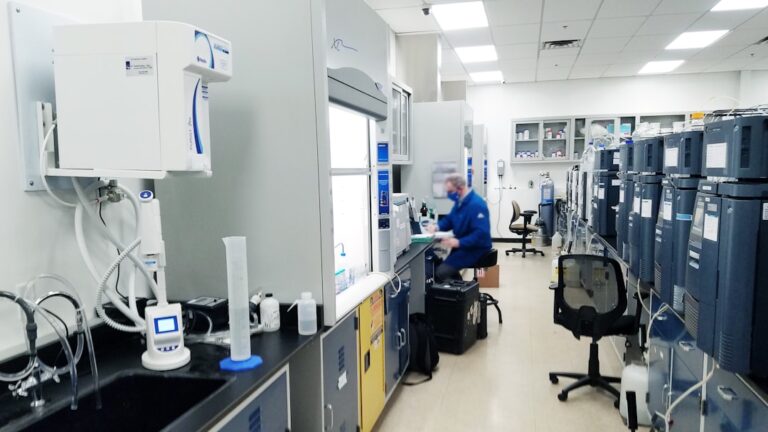
Learn what HPLC and mass spectrometry each contribute to peptide quality documentation, why purity and identity are different, and what to look for on a report.
Research use only
Stealth Research Labs supplies compounds strictly for qualified laboratory and in-vitro research. Not for human or animal consumption, diagnosis, treatment, or prevention of disease.
Please confirm below before entering. Read our Privacy Policy and Research Use Notice.